
A greek version of this text (found here) was printed in 500 copies and distributed during the strike demonstration of the 9th of April ’25 in Athens.
(in pdf form here)
On the 1st of November, 2024, part of the canopy of the railway station of Novi Sad in serbia collapsed, killing 15 people. University occupation, blockades in central roadways and strikes follow. For five months now, the mass mobilisations have not stopped, despite the stepping-down of politicians, the repression, and the propaganda calling demonstrators “agents of foreign interests”.
On the 15th of March, while the biggest crowd ever assembled in Belgrade was keeping 15 minutes of silence for the dead, the quiet was pierced by the sound of a sound-canon. “As if 200 planes were crashing”. Sound waves that if you were close the moved and pushed you, and if you were further you felt their impact without knowing what is this thing that approaches you as if to trample you. Besides the immediate pain and hearing problems, on the same night and in the following days people had headaches, high blood pressure, vertigo and nausea, while disfunctioning hearing aids and pacemakers were also reported.
A few days later, on the 21st of March, one more person dies from their injuries from the collapse of the railway canopy. A 19 year old –the 16th death of Novi Sad. The demonstrations in serbia continue, universities remain occupied, new autonomous forms of organisation sprout in neighbourhoods seeking answers to the devaluation that births accidents-murders everywhere.
from the military ((((((·)))))) to the police
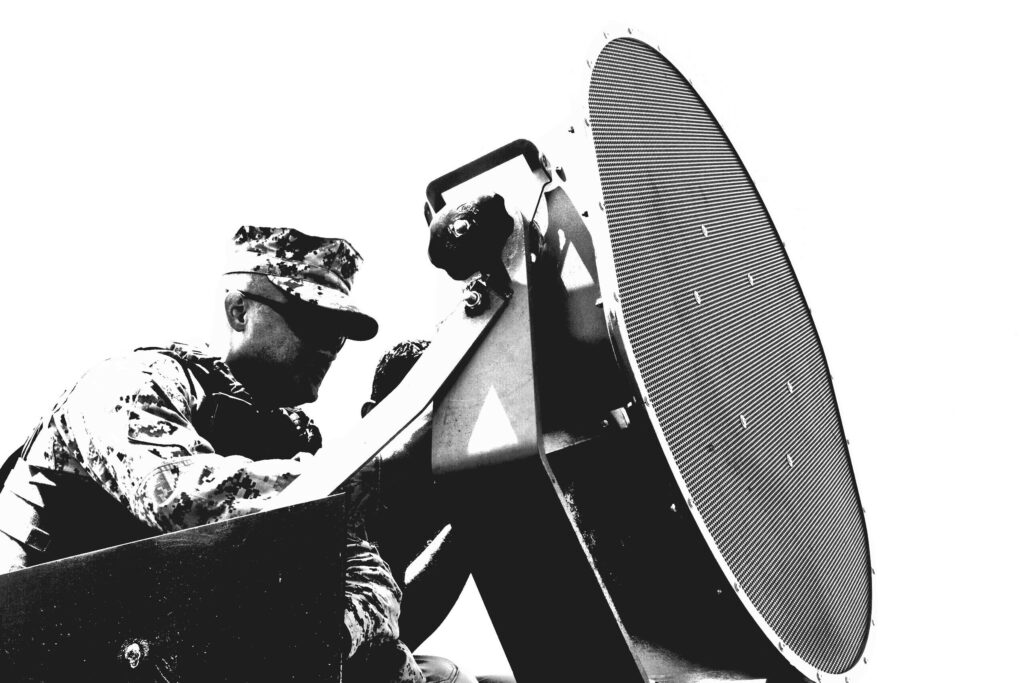
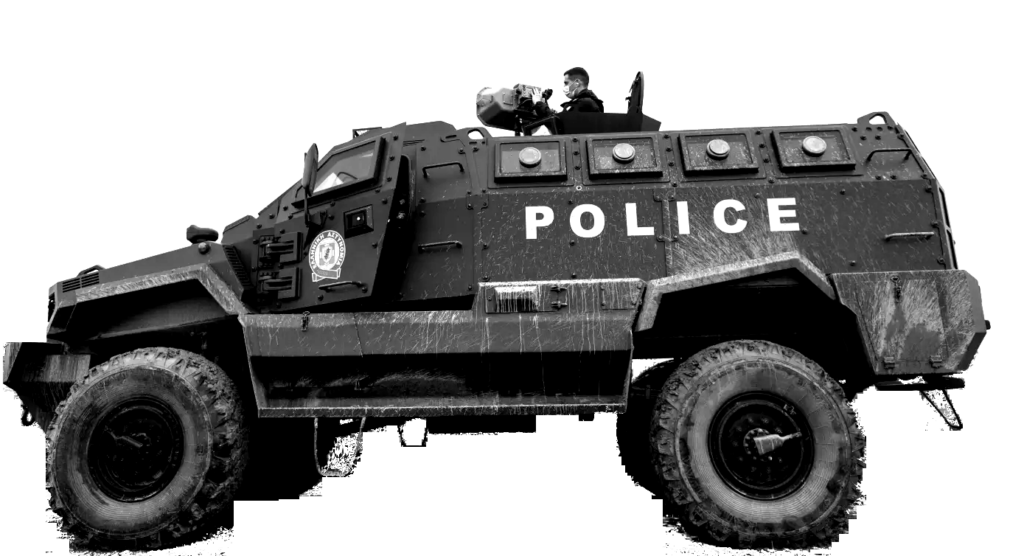
The weapon used on the demonstrators of the 15th of March was a sound-canon, or LRAD (Long Range Acoustic Device). LRADs were developed by the united states army and Genasys Inc (previously known as the American Technology Corporation and LRAD Corporation), and, as many other weapons and techniques prior (e.g. tear-gas, which was developed during the 1st WW), their uses quickly expanded from the army to the police.
This type of “exchange” betrays the contemporary continuity between the military and the police, which in turn reflects how, historically, the two bodies once were one. With the replacement of monarchies and the new legitimisation of democratic power in modern nation states, these bodies were gradually separated on the basis of different political rights and state obligations between parts of local populations and populations of other states. And so, bringing the cavalry and firing rifles on striking citizen-workers was replaced, slowly, with the gendarmerie1, and later with special police units of riot control (such as the greek MAT). In other words, the story goes from pure army, to a distinct but militarised police.
note 1
A military force with law enforcement duties. “Χωροφυλακή” (chorofylaki) in greek.
The fact that the distinction between military and police, external and internal enemy, has only been a formality results from the needs that these two bodies come to serve: Even though the formal distinction posits the military as a body of greater capability for violence that intervenes in “external” affairs, military operations have, in different periods and different regions, born the characteristics of a political-police operations, since it the exploitation -and not the full destruction- of the local proletariat and natural resources is what is demanded by international capital. Similarly in “internal” affairs, the formal distinction breaks down when local populations need to be confronted with particularly heightened levels of violence, either because they comprise a devalued or surplus labour force that isn’t worthy of protection, or because they express negations and pose risks to the social order, the normalcy of social roles and relations of exploitation.
In the context of this only formal distinction between the military and the police, the internal and the external, one can observe a “boomerang effect”: Methods of control and repression that are exercised on populations that are marginal (geographically or socially), that belong to lower strata in terms of nationality, race or class, or that exist in the frontiers of war or in the borders “return” to control and repress the wider population of the mainland and the metropolises.
from the borders ((((((·)))))) to the metropolises
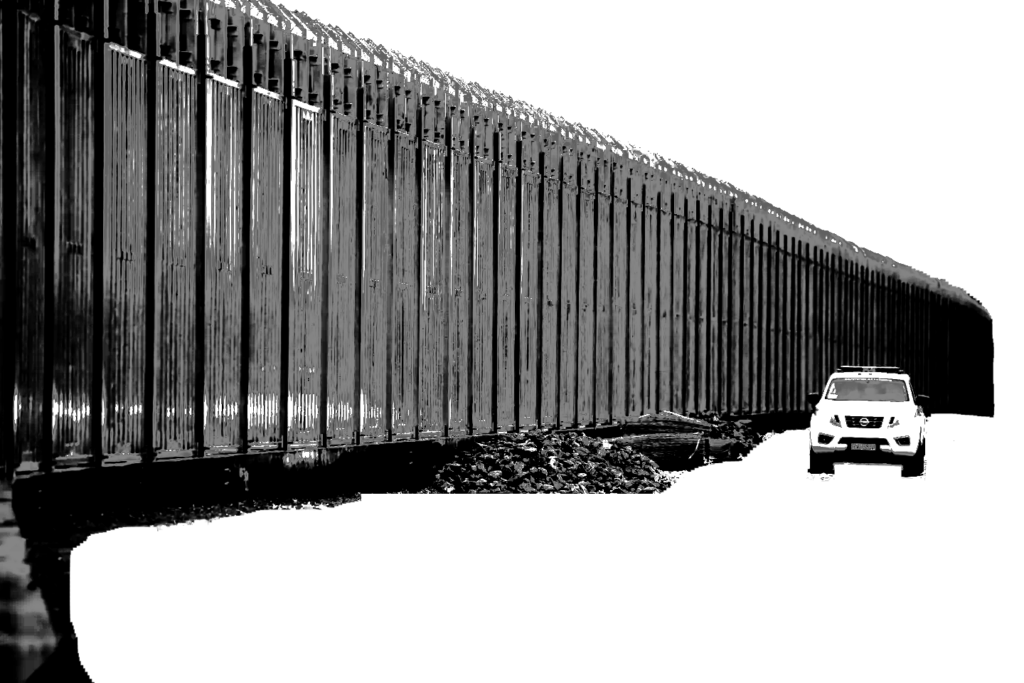
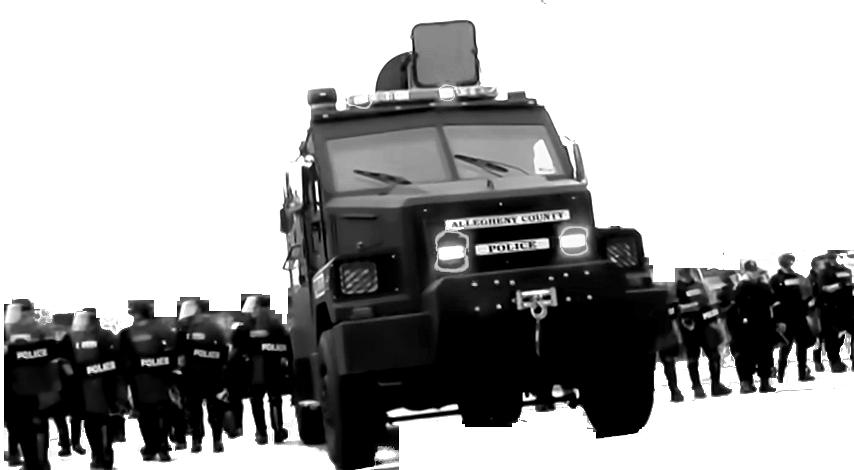
From the united states, where LRAD was invented in 2000, this technology was first put in use in Iraq, before it was transferred to the police arsenal for the management of (local) crowds as soon as in 2004. It was first put in such use in 2011, against the occupations of public spaces in the context of the Occupy movement.
After the 15th of March, the serbian government initially refused having used sound canons against the demonstrators, saying, in fact, that the serbian state doesn’t own such equipment, since it deems it illegal. Even so, the use of sound-canons in serbia has been recorded since 2023: In a recent statement, the Border Violence Monitoring Network writes that a special operation -in the presence of Frontex- took place between October 2023 and January 2024. In this operation the serbian army used sound canons against people on the move in the north of the country, in order to push people away from informal camps and into state-controlled centres. The same statement makes reference to the LRAD canon used on the 15th of March in Belgrade, saying that it was produced by Genasys and bought through an Israeli arms trade company in 2022.2
note 2
Border Violence Monitoring Network: BVMN Statement on the use of Sonic Weapons in Serbia. April 2025
Accordingly, Genasys’ LRADs have been procured by the greek state two years earlier, in 2021, adding sound canons to the arsenal on the Evros fenced border. “As people begin to travel again”, wrote news articles of the time, in the midst of changing pandemic measures, “Europe sends a loud message to immigrants: stay away” (sic). How long until we hear a “loud message” in Athens?
from “others” ((((((·)))))) to “us”
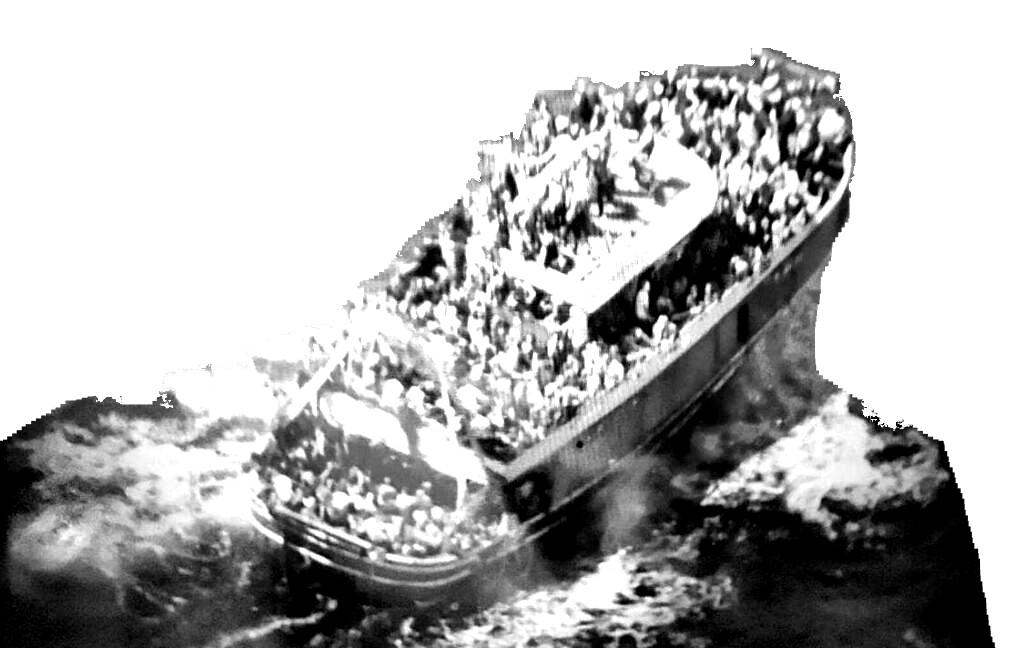
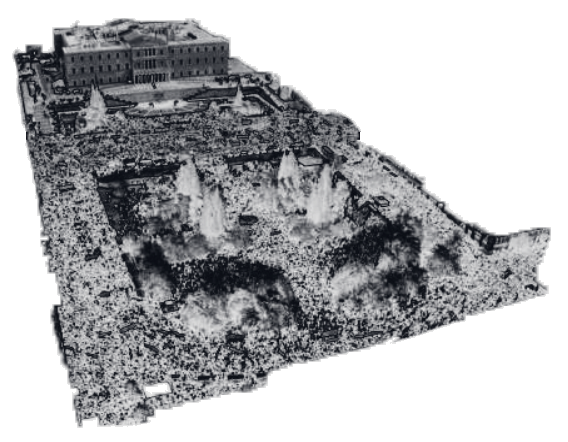
Nationalism and racism, as dominant discourses and as informal and institutional practices, produce classes of people for which more control, violence and exploitation is legitimised. The “smart fence” of Evros with the drones, the cameras, the tear-gas, the stun-grenades, the water-canons, the sound-canons and other “non-violent” methods pushes people in more dangerous sea routes where the also “non-violent” manoeuvrers and tows of the coast-guard wash the murders of migrants as unfortunate drownings.
Pylos and Tempi has the following difference: For the population whose centre of perception is the public sphere of the greek or the european citizen, the 750 passengers of the fishboat that the greek coast-guard sunk on the 14th of June 2023 had their fate already sealed: As people that crossed european borders coming from Egypt, Syria, Pakistan, Afghanistan, Palestine and elsewhere, they were meant to become nameless, exhausted prisoners of the traps of asylum bureaucracy and/or invisible hyper-exploited workers (as it happened with the 104 that were rescued). Or, they were meant to die in the borders. Their existence was not tied to any promise of a future. (This always on the basis of a perception centred on the public sphere of the greek or european citizen. Because the same individuals that in one sense are found in a state of social death, in another sense, from another angle, are persons with history, with past and future).
From the same position of viewing the world, the greek students that lost their lives in Tempi did not have such a fate. They had an uncertain future in front of them, as they grew up and lived in the precarious era of successive crises, but, nonetheless, they had a future bearing promises. Perhaps it is because of this that from the 57 deaths it is the loss of the 14 university students (and the 4 recent graduates), and the speech of the relatives, that has been especially moving (or at least apparently more moving than the loss of the victims that were workers, unemployed, and immigrants).
Truly, the things that separate us are many, and they don’t consist only of nationalist mythology and other ideological constructions of this kind. Our lives are deeply divided, and the separations between us become real through a series of institutions, they become experienced in space, in the body. We find ourselves in different sides of a wall, but it is the same wall that we must tear down. The more we do so, we will likely start to face a power with a similar face: technologies of surveillance, pain, death and isolation. A part of that are the “LRAD” sound-canons.
To break divisions until our differences are not
but expressions of diverseness and variety
Common struggles for life, until it is no longer that only death unites us
Support of base unions,
participation in collectivities, politicisation of everyday life
Strikes, occupations, enduring struggles
solidarity and counterattack